Bob Borrmann: A man of steel in the skies


There are people whose stories seem too extraordinary to be true. Bob Borrmann’s is one of them. A decorated Army Air Force cadet, World War II hero, and lifelong aviator, Bob’s journey through life is one of courage, resilience, and an unwavering passion for flight.

Born in San Francisco in 1918, just months after the end of World War I, Bob’s fascination with aviation began early. After graduating from St. Ignatius High School and passing a two-year college equivalency test, he embarked on pilot training at Moffett Field, followed by advanced training at Luke Air Force Base. But life, especially in the military, has a way of surprising you. Bob, who trained as a fighter pilot, found himself reassigned to the B-17 bomber, a four-engine powerhouse that would become both his battleground and his love.

His first true test came during a night flight from Walla Walla, Washington. After takeoff, one engine failed, and with the airfield lights turned off and the control tower crew heading for coffee, Bob had to navigate in near darkness. On his second pass, he managed to bring the plane to a halt near a hill, saving his crew before the aircraft was consumed by fire. It was a harrowing start to what would become a legendary career.

Bob flew 52 combat missions over North Africa and Italy during World War II. Twenty-five of those missions saw his B-17 hit by flak and small arms fire. After one particularly brutal mission to Ploesti, Romania—a critical Axis oil supply—mechanics counted over 1,200 holes in his aircraft. Ploesti was one of the most dangerous targets in Europe, and Bob flew three missions there, earning the Air Medal and seven Oak Leaf Clusters.

His missions also included bombing the Me-109 fighter factory in Austria and attacking submarine pens along the French coast. Over his wartime career, Bob piloted 11 different aircraft, including the B-17, P-51 Mustang, B-25 Mitchell, A-20 Havoc, and A-26 Invader, logging more than 900 hours in the AT-6 alone. He was, quite simply, a man of steel.

After the war, Bob didn’t just walk away from the skies. He continued to fly for nearly 50 more years, exploring the skies over North and South America. His hangar housed an impressive collection of aircraft, including a Beech Queen Air once owned by the King of Denmark, a Spartan Executive, and a Meyers and Navion, all meticulously maintained and loved.

Bob flew out of San Carlos Airport from its opening in 1947, becoming a beloved figure in the aviation community. But for me, Bob’s legacy is more than his flight hours or the medals he earned. Bob was the father of my close high school friend, Paul Borrmann, and a friend of my Grandpa Urban from San Francisco. His calm demeanor and ability to handle any challenge with grace left a lasting impression on me. Whenever I find myself stressed, worried, or overwhelmed, I ask myself, “What would Bob do?”—because Bob never sweated the small stuff.

Bob’s story is a reminder that passion, resilience, and calm determination can carry you through any storm. Whether building a business, navigating life’s challenges, or simply chasing your dreams, we could all stand to take a page from Bob’s flight manual.
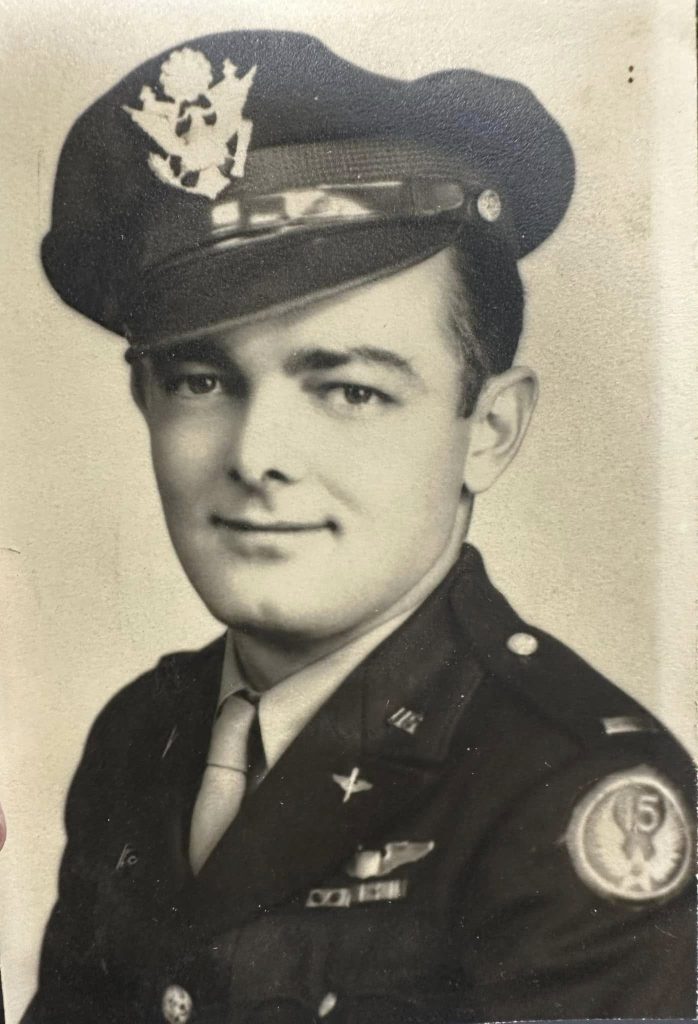
Here’s to Bob Borrmann—the “Man of Steel” whose legacy continues to inspire both in the skies and on the ground.